Many travelers want to stay somewhere that protects the places they visit, yet sorting genuine ecolodges from properties that simply lean on green marketing can be surprisingly difficult. A leafy logo and a reusable water bottle tell you very little. This guide explains how ecolodges actually work, what sets them apart from conventional resorts, and how to judge whether a property’s sustainability claims hold up.
We start with what makes a lodge an ecolodge, then cover how to spot greenwashing and where these stays work best, from rainforests to deserts and coastlines. You’ll also get a realistic picture of what an ecolodge stay feels like day to day, what typical nightly rates look like and when to book, plus practical tips for traveling responsibly once you arrive. By the end, you’ll know exactly which questions to ask before reserving a sustainable lodge stay.
What Makes a Lodge an Ecolodge
An ecolodge is small-scale lodging built to minimize its environmental footprint, protect the ecosystems around it and bring real benefits to nearby communities. It is not simply a hotel with a nature theme. The design, daily operations and staffing all revolve around reducing impact and supporting the people who live in the surrounding area.
Typical features you’ll find
Most genuine ecolodges share a common set of features. They generate a large share of their power from renewables such as solar panels or small hydro systems, especially in remote locations far from the grid. Water is recycled or carefully rationed, buildings are constructed with local materials that suit the climate, and waste is reduced through composting, careful purchasing and minimal packaging. Just as important, ecolodges hire locally, so wages flow into the surrounding community rather than leaving the region entirely.
Scale is another defining trait. Ecolodges usually host 10-30 guests at a time, far fewer than conventional resorts, which can accommodate hundreds. That small footprint keeps trails, water sources and wildlife habitat under less pressure, and it changes the atmosphere of the stay itself: quiet evenings, personal attention from staff and a genuine sense of place rather than a resort bubble. If a property advertises hundreds of rooms alongside claims of being an eco-resort, that mismatch is worth questioning before you book.
How to Spot Genuine Ecolodges Versus Greenwashing
The fastest way to separate a genuine ecolodge from a greenwashed one is to look for third-party certifications. Programs such as LEED, Green Globe, Rainforest Alliance and EarthCheck audit properties against measurable standards for energy, water, waste and community impact. A logo without a verifiable certificate behind it means little, so check the certifier’s website or ask the lodge for its current certification details. Don’t be shy about this: legitimate operators expect the question and answer it easily, while greenwashed properties tend to deflect or offer marketing language instead of documentation.
Red flags tend to follow a pattern. Be cautious when a property uses vague phrases like “eco-friendly” with no specifics, publishes no sustainability policy on its website, or shows no sign of involving the local community in staffing or sourcing. Genuine ecolodges are usually proud to explain exactly how they operate, and many publish annual reports or detailed FAQs covering their energy setup, waste systems and hiring practices before you even ask.
- Energy source: Ask what percentage of power comes from renewables and what happens during cloudy periods or generator backup, since a real answer reveals how deeply sustainability is built into operations.
- Waste handling: Find out whether the lodge composts organic waste, recycles and how it disposes of what cannot be processed on site, especially in remote areas with no municipal collection.
- Local employment: Ask what share of staff comes from nearby villages and whether any hold management roles, which shows the community benefit is structural rather than cosmetic.
- Food sourcing: Question how much of the menu comes from on-site gardens or farms within 50 km, a distance that keeps transport emissions low and money in the local economy.
Lodges with nothing to hide will answer these questions readily, often with specific numbers. Vague or evasive replies are themselves useful information, and a pattern of them across several questions is a strong signal to look elsewhere.
Where Ecolodge Stays Work Best
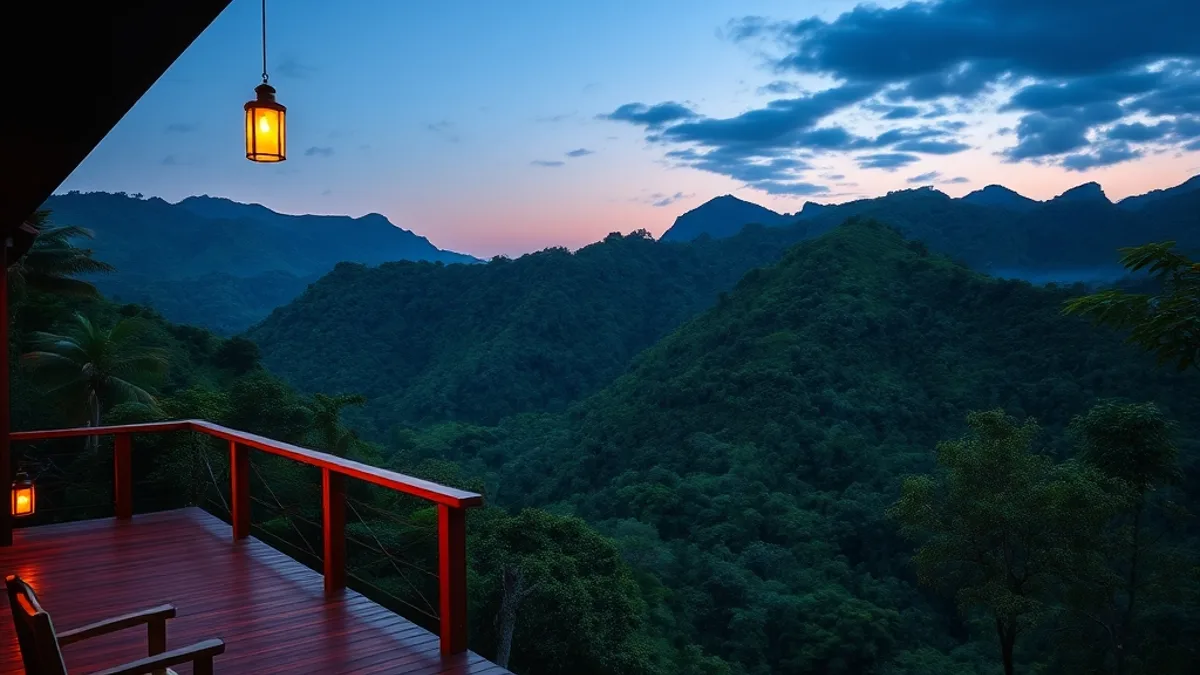
Ecolodges work best in settings where the landscape itself is the main attraction and low-impact design genuinely matters. Rainforest destinations are the classic example. In Costa Rica, Sri Lanka and Brazil, rainforest ecolodges pair conservation work with guided nature experiences, so your stay directly supports protecting the forest around you. For a close look at what this feels like in practice, see our stay at The Rainforest Ecolodge in Sri Lanka, set high in jungle terrain with guided walks right from the property.
Desert and coastal settings
Desert and coastal ecolodges face a different challenge: water. In these environments, properties focus heavily on water conservation, from low-flow systems to careful landscaping, and on low-impact building design that uses local stone, shade orientation and natural ventilation instead of energy-hungry cooling. The result is often striking architecture that blends into the landscape rather than fighting it.
Matching the setting to your goal
Think about what you want from the trip before choosing a location. If wildlife is the priority, rainforest and safari-adjacent lodges offer guided viewing that resorts cannot replicate. If you want deep jungle immersion, pick remote properties accessible mainly by guided transfer, where the sounds of the forest replace road noise. And if your goal is a quiet landscape retreat, desert and coastal ecolodges deliver wide horizons, dark skies and few neighbors. Matching setting to purpose is what turns a sustainable stay into a memorable one.
What an Ecolodge Stay Actually Feels Like
If you arrive at an ecolodge expecting a standard resort experience, the first thing you will notice is the architecture. Most ecolodges use open-air structures with wide verandas, screened windows and high ceilings designed for natural ventilation. Air conditioning is often limited to a few hours in the afternoon or unavailable entirely, and power typically comes from off-grid sources like solar panels. Ceiling fans, warm lighting and hot water that arrives with a short wait are all part of the deal.
Comfort is simpler, not worse. Beds are usually solid and well made, mosquito nets are standard in tropical settings, and the lack of televisions or loud pool areas means the soundtrack is birdsong and rain on a thatched roof instead of lobby music. If you need blackout curtains, strong air conditioning around the clock and a swim-up bar, a conventional resort will suit you better.
What fills your days
Daily schedules revolve around guided walks, wildlife viewing and cultural activities rather than resort amenities. You might wake before sunrise for a birding walk, join a naturalist on a jungle trail after breakfast and spend the afternoon on a village visit or a boat trip. Evenings tend to be quiet: dinner, a talk from a guide, then early sleep so you can be up at dawn again.
Meals are a highlight in most genuine ecolodges. Kitchens often feature 70-90% local or garden-grown ingredients, and menus are usually set rather than à la carte, since the lodge cooks what is fresh that day. Tell the lodge about dietary needs when you book, as choices can be limited in remote locations.
How Much Ecolodges Cost and When to Book
Ecolodge nightly rates typically run $150-$600 per night, with the price driven mainly by remoteness and what is included. A lodge a short drive from a road town with self-guided trails sits at the lower end, while a fly-in jungle or safari property with private guides and full board lands at the top of the range. Because many ecolodges cap occupancy at just a handful of guests, there is little economy of scale, and that smaller footprint is part of what you are paying for.
Timing matters as much as budget. For dry season travel in tropical regions, which runs roughly May to October, book 3-6 months ahead. The best rooms and the most experienced guides fill first, and last-minute deals are rare at small lodges. Shoulder-season dates just outside that window can be noticeably cheaper, though wildlife viewing may be less reliable.
- Guided excursions: many rates include daily naturalist-led walks, boat trips or wildlife drives, activities that can cost a significant amount if booked separately at a conventional resort.
- Meals and transfers: full-board pricing with set menus is common, and some remote lodges bundle boat or 4×4 transfers from the nearest access point into the rate.
- Seasonal pricing: shoulder-season dates often come with lower rates and quieter trails, so shifting your dates by a few weeks can stretch the budget.
- Conservation contributions: some lodges add a per-stay conservation or community fee, so ask what is included before comparing two properties on price alone.
The practical takeaway is to compare total value rather than room price alone. Before booking, email the lodge and ask for an itemized breakdown of what the rate covers, including activities, meals, transfers and any fees. A $450 lodge that includes guides, meals and transfers can cost less overall than a $250 room where every activity and meal is billed separately. Checking current rates directly is also wise, since prices change from year to year.
How to Travel Responsibly During Your Stay
The most important rule at any ecolodge is to follow the lodge’s own guidelines. These cover wildlife distance, trail use and quiet hours, and they exist because the lodge staff know exactly how much pressure the surrounding ecosystem can take. If a guide says to stay a certain distance from an animal, keep to it, even when the animal seems relaxed. Stick to marked trails, since cutting new paths damages vegetation and disturbs habitat.
Reducing your own footprint
Minimize single-use plastics by bringing a refillable water bottle and refusing plastic bags and straws where you can. Many remote lodges have no recycling system, so whatever you bring in has to be packed out or burned, which is a strong argument for traveling light on packaging. Reuse towels and linens as the lodge requests rather than expecting daily changes, and take shorter showers where water is heated by solar or carried in from a distance.
Where your money goes
Choose lodge-run local tours whenever possible, because spending that stays with the lodge supports the surrounding community through wages, food purchases and village projects. Ask which guides are from nearby villages and whether the lodge buys produce locally; genuine ecolodges are usually proud to answer. Booking excursions through outside operators instead can divert that income away from the community the lodge was built to benefit.
Finally, treat cultural activities with the same respect as wildlife encounters. Ask before photographing people, follow your guide’s lead on local customs, and remember that a village visit is a privilege arranged by your hosts, not a sightseeing stop included for entertainment.
Final Thoughts on Choosing Ecolodges
If you want a stay that protects nature rather than just markets it, an ecolodge is a strong choice. Genuine properties combine low-impact design, community benefit and nature-focused experiences in small settings, usually hosting just 10-30 guests at a time. The clearest signals of the real thing are third-party certifications like LEED, Green Globe, Rainforest Alliance or EarthCheck, a transparent energy sourcing story, and a small guest capacity.
Once you know what to look for, the greenwash fades quickly. Expect nightly rates of roughly $150-$600 and book 3-6 months ahead to secure the best sustainable stays in popular regions. Have you stayed at an ecolodge, or are you planning your first one? Leave a comment or share this article with a fellow traveler.