Trying to book a hotel for a large group can feel like a part-time job. You line up rooms for a reunion, wedding or corporate trip, and then watch the party scatter across three floors and two different rates because everyone booked separately. Piecemeal bookings also cost more, since individual reservations rarely qualify for group pricing and offer little protection if the hotel shuffles rooms at the last minute.
This guide walks you through the whole process, from understanding why group bookings fall apart without a plan, to timing your block and negotiating rates and attrition clauses. You’ll also learn how to keep rooms together on the same floor or in connecting rooms, how to pick a property that suits your room mix, and how to handle payments, rooming lists and a smooth group check-in. Follow the steps in order and your whole party will arrive to rooms that are actually together.
Why Group Hotel Bookings Fall Apart Without a Plan
Booking rooms one by one is the fastest way to end up with your group split across different floors, wings or even rate levels. Each guest who calls or books online gets whatever is left in inventory at that moment, so your aunt ends up near the elevator while your cousins land in a different wing entirely. The hotel sees a dozen unrelated reservations, not one group that belongs together.
Individual bookings come with no protections
When a hotel overbooks or needs to reallocate rooms, it protects its groups first. Guests on individual reservations have no such safety net, which means they can be moved, downgraded or, in rare cases, walked to another property. A group block locks your rooms in as a unit, so the hotel can’t quietly hand them to someone else.
Define your headcount and room split first
Every type of gathering needs a different room mix. A family reunion might need connecting rooms for parents with young kids plus a few doubles nearby. A wedding block usually mixes king rooms for the couple and VIPs with doubles for guests. A corporate retreat often wants identical rooms for fairness and maybe a suite for the team lead. Before you contact any hotel, count your heads, decide how many kings, doubles and connecting rooms you need, and note who might share. Walking in with those numbers makes every later conversation easier.
When to Book: Group Block Lead Times and Timing
Timing is the biggest lever you have when organizing rooms for a crowd. For peak-season dates or weekends that collide with a major local event, contact hotels 6-12 months ahead. Popular destinations sell out their desirable floors and room types first, and by the time your guests book individually, the hotel may have nothing left in the wing you wanted.
Why off-peak dates work in your favor
If your dates are flexible, shift the trip to the shoulder or off-peak season. Off-peak stays often run 20-40% cheaper than high-season rates, and the savings compound across ten or twenty rooms. Just as importantly, you get more negotiating room on room placement: a hotel with empty floors is far more willing to put your whole group on one corridor than one running near capacity.
How many rooms do you need for a group block?
Group blocks are typically offered for bookings of 10+ rooms per night. If your party clears that threshold, ask the group sales desk for a block rather than booking room by room. Smaller parties aren’t out of luck, though. Call the hotel directly and ask about an adjacent-room hold or a courtesy note on your reservation requesting nearby rooms. It’s not a contract, but front desk teams often accommodate the request when occupancy allows, especially if you mention it when the first room is booked rather than the week of arrival.
How Group Rates and Attrition Clauses Work
Once a hotel expresses interest in your block, get the numbers in writing. Ask the group sales manager to quote the group rate alongside their best available rate for the same dates, so you can compare fairly instead of guessing whether the “group discount” actually beats what you’d pay booking online. A written quote also protects you if the hotel’s public rates drop later, since it gives you something concrete to reference in a renegotiation.
The most important fine print is the attrition clause. This is the section that says how many of the blocked rooms you must actually fill. Group room blocks usually include a courtesy period of 30-60 days before the stay during which you can release unsold rooms without penalty. Read it carefully: if you release rooms after that window closes, you can owe charges for the unused nights. Mark the deadline on your calendar the day you sign.
Negotiation is normal at this stage, especially for larger blocks. Beyond the room rate itself, ask for extras such as:
- A comp room — asking for a free room after 20-30 booked rooms is a common industry practice, and it can cover your planner or group leader.
- Waived deposits — many hotels require an upfront deposit on group blocks; ask whether they’ll waive it for a signed contract or established corporate account.
- Free meeting or gathering space — a conference room for a retreat or a hospitality suite for a reunion reunion briefing is often thrown in for groups that fill a meaningful share of the house.
Properties that take sustainability seriously often bundle these perks with other group-friendly touches, and you can spot them among hotels known for their eco-luxury initiatives, which frequently cater to retreats and multi-room bookings. Whatever you agree on, make sure every extra appears in the contract, not just in a phone call or email thread.
Keeping Rooms Together: Floor, Wing and Connecting Room Requests
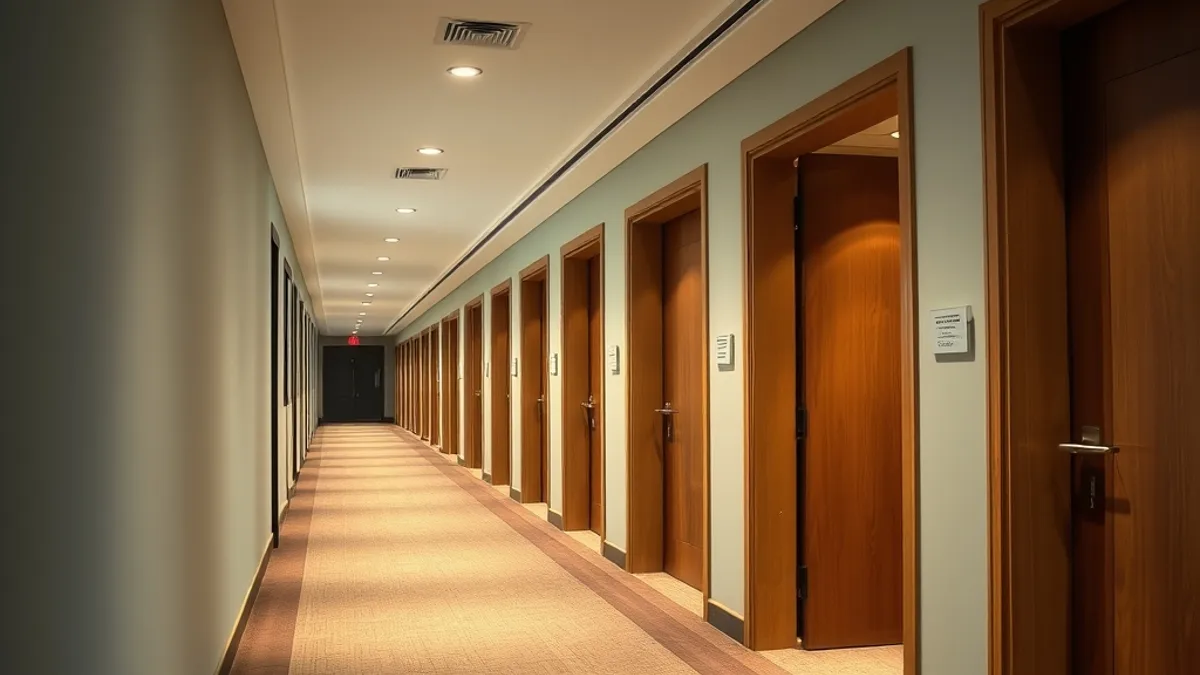
The single biggest mistake group organizers make is treating “keep us together” as a casual request made at check-in. Front desk staff can only shuffle whatever rooms happen to be vacant that day, and during busy periods there may be nothing to shuffle at all. If staying near each other matters to your group, the request belongs in the written contract as a specific clause, not in a phone conversation someone will forget. A verbal promise from a friendly sales manager carries no weight once that person changes jobs or your dates get busy.
Get precise about what “together” actually means for your party. A wedding party might need the same wing; a family reunion might need real connecting doors so grandparents can hear the grandkids. Ask the hotel to confirm in writing how many connecting rooms exist on the property and whether any of them can be held for your block, because these rooms are limited and tend to sell out first.
Before you sign, put the following items on paper:
- Same-floor clause: specify a floor number or wing in the contract, and add a remedy such as a rate adjustment if the hotel cannot honor it.
- Connecting versus adjoining: connecting rooms share an internal door, while adjoining rooms are simply next to each other — confirm which one you are actually getting.
- Suites for leaders: hold one suite or larger room for the group organizer so it can double as a meeting and gathering point.
- Rooming list deadline: hotels typically want guest names 2-4 weeks before arrival, so confirm the exact date in writing.
- One point person: name a single contact who submits and revises the list, so the hotel never receives conflicting versions from different guests.
Choosing the Right Property and Room Mix
Not every hotel can physically accommodate a large group well, no matter how good the rate looks. Before you sign anything, ask specific questions: how many connecting rooms does the property have, is there a lounge or shared space where your group can gather informally, and can the breakfast area handle 20 or more people arriving at once? A hotel with a cramped lobby and a small breakfast room will strain even a well-planned block.
Service quality matters even more than the facility list when you are managing a big party. Guests will lose key cards, need room changes when families merge, and show up at odd hours. Properties known for their exceptional hospitality and guest services handle these small frictions without drama, which is exactly what a group organizer needs. Reading recent reviews that mention group stays gives you a realistic picture of how the staff performs under pressure.
Why family-friendly resorts often win
Family-friendly resorts are built for multi-room, multi-generation groups in a way that boutique properties rarely are. They typically offer connecting rooms in larger numbers, flexible dining arrangements, and activities that keep different age groups occupied. Their staff also deals with family group logistics every week, so requests like adjacent rooms for grandparents and parents are routine rather than exceptional. If your group skews toward families, browse family-friendly hotels that work well for vacations with kids before you settle on a property. A small boutique hotel may charm two travelers, but it often lacks the room inventory and staff depth that a 20-guest booking demands.
Managing Payments, Rooming Lists and On-Site Check-In
Money and logistics cause more group friction than the hotel itself, so sort both out before you sign the contract. Decide who pays for what, get the rooming list process straight, and agree on a check-in plan with the hotel in advance. A little structure here saves you from chasing stragglers, untangling duplicate bookings and absorbing charges that were never your responsibility. The steps below take you through each decision in order, and they work just as well for a family reunion as for a corporate retreat.
- Choose a payment structure before signing. Weigh three options: a master bill where the organizer pays everything, per-room guest cards where each person covers their own incidentals, or a split deposit where the group funds a partial payment upfront. Each affects cancellation exposure and guest reimbursement differently, so agree on it early and put it in writing.
- Send one consolidated rooming list. Collect names, arrival dates and room pairings yourself and submit a single document. When guests book or email the hotel separately, the front desk ends up with duplicates and mismatches that scatter your block.
- Match the list to the contract layout. Cross-check your list against the floor and wing requests you negotiated, and flag connecting rooms and the leader’s suite explicitly so housekeeping and the front desk see the same plan.
- Arrange a group check-in slot. Ask the hotel to pre-assign rooms and pre-key cards so your guests collect keys and walk straight to their rooms instead of forming a 20-person line at the desk.
- Brief your guests before arrival. Share the check-in time, parking situation and who to call if someone arrives late, so no guest improvises their own arrival plan.
Hotels vary widely in how smoothly they run this process, and properties praised for their guest service — the kind covered in guides to hotels with standout guest service — tend to assign a dedicated group coordinator who manages the rooming list and check-in for you. Ask whether that role exists when you tour the property, because one capable coordinator can replace hours of your own follow-up work. If the hotel cannot offer one, appoint a deputy from your group to handle day-of questions so you are not answering every text yourself.
The Bottom Line for Group Hotel Bookings
Booking a large group one room at a time is how you end up with your party scattered across three floors and a bill that jumped after the second reservation. The fix is simple: contact hotels 6-12 months ahead, aim for a block of 10+ rooms per night, and lean on off-peak dates to save 20-40% while gaining room to negotiate.
Just as important, get the details in writing. Put your same-floor or same-wing request, the attrition window and your payment terms directly into the contract, then designate one planner to submit the rooming list and coordinate a single group check-in. Do that, and your reunion, wedding or retreat arrives as one group instead of a puzzle. If this helped you plan a big booking, leave a comment or share the article with whoever is organizing the next trip.