You’ve probably noticed yurts popping up on glamping sites and booking platforms, but if you’re not sure what one actually offers inside, or how it differs from a safari tent or a cabin, you’re not alone. Yurt stays sit somewhere between camping and a proper hotel room, and that in-between status is exactly why they confuse first-timers. Some are rustic with shared bathhouses, while others come with en-suite bathrooms and hot tubs.
This guide breaks down everything you need to plan a yurt trip with confidence. We’ll explain what a yurt actually is, how it compares to tents, cabins and safari lodges, and where to find the best ones around the world, from Mongolian ger camps to Oregon coast state parks. You’ll also learn when to book, what amenities to expect at different price levels, and how to choose the right yurt stay for your group. By the end, you’ll know exactly what to look for before you click reserve.
What Exactly Is a Yurt?
A yurt is a circular, domed tent originally developed by nomads across Mongolia and Central Asia, where it has served as a portable family home for over 3,000 years. Traditional versions were designed to be taken down and moved with the herds, yet they stayed warm through brutal steppe winters. That clever engineering is what makes the modern glamping yurt possible.
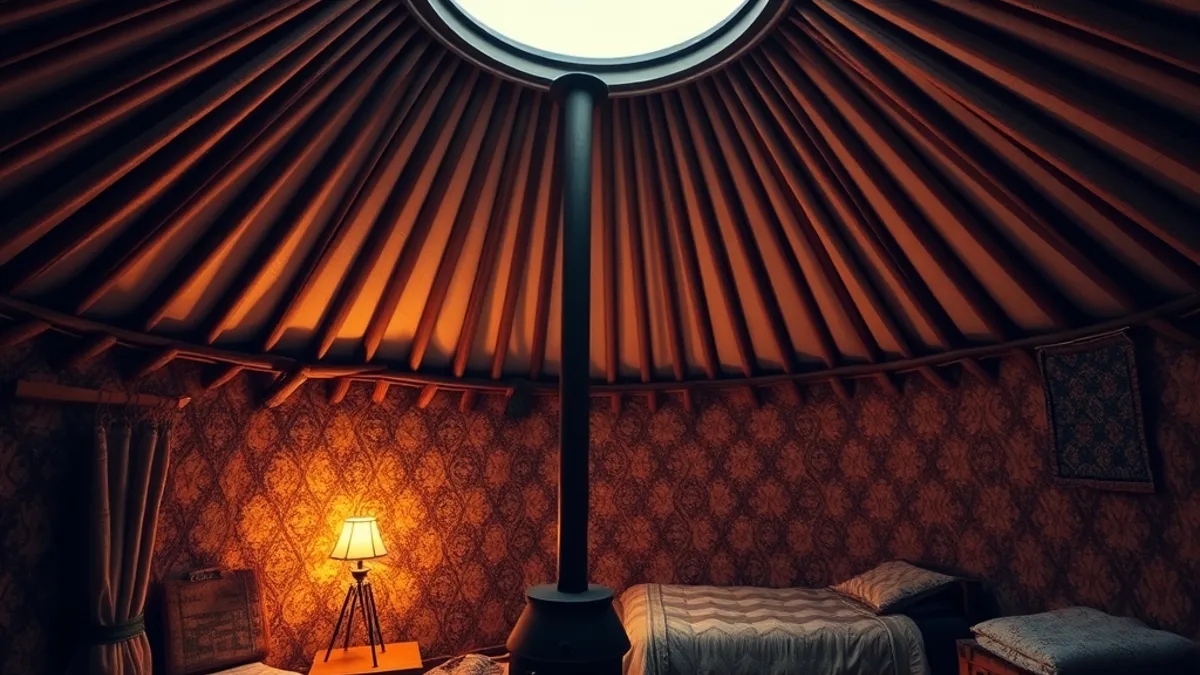
Today’s glamping yurts borrow the same core structure: wooden lattice walls that expand like an accordion, a tension ring that holds the walls in place, and a weatherproof canvas or vinyl cover stretched over the frame. The result feels surprisingly solid from the inside, with none of the sagging fabric you might expect from a tent.
The dome and the skylight
The defining feature is the central skylight, also called a compression ring, at the very top of the dome. It lets in natural light during the day and provides ventilation, which keeps the round space from feeling stuffy. On clear nights, some guests find it doubles as a window for stargazing from bed.
Size is the other big difference from tent camping. Floor space in glamping yurts typically ranges from 200 to 700 square feet, far larger than a standard tent, so there’s room for real furniture, a seating area and luggage you don’t have to crawl over.
How Yurt Stays Compare to Tents, Cabins and Safari Lodges
Compared with a bell tent or safari tent, a yurt gives you noticeably more headroom and open floor space. Glamping yurts typically offer 200-700 sq ft of floor space, so you can stand and walk around most of the interior rather than stooping near the edges. The straight lattice walls and circular layout create a central living area that tents simply can’t match, which makes a real difference on longer stays or rainy afternoons.
Against a cabin, the trade is different. Yurts are semi-portable structures with fabric walls, so expect a canvas ambience rather than solid walls. You’ll hear the wind and rain more, and the space feels closer to the outdoors, which many guests consider part of the charm rather than a flaw. If you want the hush of solid walls, a cabin may suit you better.
Most glamping yurts come far better equipped than any tent. Real beds that sleep 2-6 guests are standard, and heating usually comes from a wood stove or other heater. Bathrooms are often private but located in a nearby structure, though upscale sites increasingly offer en-suite facilities. Prices generally run $80-400 per night depending on region and season.
- Sound carries: conversations and snoring travel further in a yurt than in a cabin, so light sleepers may want earplugs or a larger unit for the family.
- Panoramic views: the circular design and skylight give you sightlines in every direction, a trade-off for the thinner walls.
- Four-season potential: thanks to insulated covers and stoves, many yurts operate well beyond the May-September peak season, when canvas tents are packed away.
- Setup is done for you: unlike a tent, you arrive to a fully pitched, furnished structure with no poles or guy lines to wrestle with.
Where to Find Yurt Stays Around the World
Yurt stays now span almost every continent, and the price gap between them is enormous. At the budget end, Mongolia offers authentic ger stays with nomadic families, typically $20-60 per night, often including home-cooked meals. These are the most traditional options you’ll find anywhere, and they suit travelers who care more about cultural immersion than plush bedding. In the US and Canada, state park yurts are a reliable entry point, with Oregon coast and Colorado mountain yurts generally running from $80-250 per night. They’re easy to book, easy to reach by car, and a low-risk way to test whether circular canvas living suits you. Europe has its own scene of yurt camps in Spain, France, Portugal and the UK, usually operating on a May-September season, often set on small farms with a relaxed, family-run feel. At the top end, luxury glamping resorts in New Zealand, Patagonia and Central Asia pair yurts with spa facilities at $200-400 per night.
- Mongolian ger camps: staying with nomadic families often includes traditional meals and a chance to see herding life firsthand; most guests arrive on multi-day circuits through the steppe or Gobi.
- US state parks: many parks let you drive right up to the yurt, making them an easy first taste of glamping for families with young kids.
- European yurt camps: these often sit on small farms or countryside estates and frequently add extras like wood-fired hot tubs and communal dining.
- Luxury resorts: expect remote, dramatic settings with spa treatments, guided excursions and chef-prepared meals bundled into the rate.
Before you commit, think about what matters most to your group: location, comfort level or price. A state park yurt might cost a third of a resort stay but come with a shared bathhouse, while a luxury yurt bundles meals and activities into one rate. Whichever region you pick, check current availability and rates directly with operators, since seasons and pricing shift from year to year.
When to Book: Seasons and Lead Times
Timing matters more with yurts than with most accommodations, simply because supply is small. In the northern hemisphere, the main yurt season mostly runs from May through September, when the weather is warm enough for canvas walls and the ground is dry. That said, winter yurts with wood stoves do operate in snowy regions like Colorado and Scandinavia, offering a cozy base for snowshoeing or northern lights trips.
Because many yurt sites have only 3-10 units, summer weekends disappear quickly. A good rule of thumb is to book 2-4 months ahead if you have your heart set on a July or August stay. Last-minute openings do happen, but relying on them for a popular location is a gamble.
Shoulder season and festival timing
May and September are the sweet spots for value and quiet. Rates tend to drop, campgrounds feel calmer, and the weather is usually still pleasant enough for a canvas stay. Pack an extra layer, and you can often get the same yurt for noticeably less than peak-season prices.
Mongolia is a special case. Ger stays peak in July during the Naadam festival, when the whole country celebrates with wrestling, horse racing and archery. If you want to be there for the festivities, book 3 or more months out, as ger camps around the capital fill up fast.
What to Expect Inside: Comfort Levels and Amenities
Yurt stays span a wide comfort range, and knowing where a property sits on that spectrum will save you surprises at check-in. Budget yurts keep things simple: you get a solid shelter with basic bedding, but bathrooms are in a shared bathhouse and cooking happens in a communal camp kitchen. It is camping with a real roof and a real bed.
Mid-range yurts step things up considerably. Expect a proper queen bed, a wood stove for cool evenings, a mini-fridge for snacks and breakfast supplies, and often a private deck where you can drink your morning coffee. Luxury yurts go further still, with en-suite bathrooms, hot tubs, full kitchens and housekeeping service, essentially a hotel room wrapped in canvas.
- Power and lighting: some yurts run on solar with limited outlets, so bring a portable charger if you rely on devices overnight.
- Kitchen setup: a “full kitchen” in a luxury yurt may still mean a two-burner cooktop rather than a full oven, so check the appliance list before planning elaborate meals.
- Water access: at rustic sites, potable water may come from a central spigot rather than a tap in your yurt, so pack refillable bottles.
One detail to always confirm before a cold-weather trip is heating. Ask the operator what heats the yurt and whether it runs all night. Stove-heated yurts need mid-night refuelling at some sites, which means someone in your group will be getting up to add logs, or you will wake up to a chilly dome.
How to Choose the Right Yurt Stay for You
Not every yurt stay suits every traveler, and the differences between properties can be bigger than they look online. Photos of a canvas dome at sunset tell you nothing about the climb to get there, the state of the bathhouse, or whether your kids will actually sleep well on a platform bed. A few minutes of research before booking will match you with the right setup instead of leaving you to improvise mid-trip. Work through these steps in order, and treat any vague answers from an operator as a signal to ask more questions.
- Match the comfort level to your group. Families generally do best with en-suite yurts of 400+ sq ft, where kids get floor space to spread out and parents get a bathroom steps away instead of a nighttime walk to a shared block. Couples happy to share a bathhouse can save money with a smaller, simpler unit and put the difference toward a longer stay.
- Check the access route. Remote yurts may require a 1-5 mile hike, a 4WD road or even a boat transfer. Confirm how you will reach the site, what parking is available, and whether luggage needs to be carried the last stretch. If you are traveling with young children or heavy gear, this single question can rule a property in or out.
- Read the cancellation policy carefully. Small yurt operators often have stricter terms than hotels, sometimes with shorter refund windows because a cancelled booking leaves an empty unit they cannot easily resell. Know the deadline before you commit, and consider travel insurance for expensive peak-season trips.
- Verify what is included. Linens, towels and firewood are extras at some sites and included at others. A firewood fee can add up quickly on a cold trip, so ask before you pack. The same goes for cooking equipment, drinking water and phone charging options.
Once you have these four boxes ticked, the rest comes down to scenery and budget. Compare a few properties in your target region, look at recent guest reviews for honest notes on noise and upkeep, and you will land on a yurt that fits your trip rather than fighting it.
The Round Trip: Wrapping Up Your Yurt Plans
So, what is a yurt stay, really? It’s a circular canvas home that blends nomadic tradition with modern glamping comfort. Most glamping yurts sleep 2-6 guests across 200-700 sq ft of floor space, with real beds and far more headroom than any tent. From authentic ger stays in Mongolia at around $20 per night to luxury resort yurts reaching $400, there’s a price point and comfort level for nearly every traveler.
The main thing to remember is timing. Booking 2-4 months ahead secures the best summer weekends in most regions, since many yurt sites only have a handful of units. If you’ve stayed in a yurt, or you’re planning your first one, leave a comment below or share this article with a friend who loves unusual places to sleep.