Rome has dozens of distinct neighborhoods, and picking the wrong base can turn a great trip into a slog of long walks, sleepless nights or paying double for a location that does not suit you. The best areas to stay in Rome each have a very different personality, from postcard-perfect lanes around the Pantheon to quiet residential streets near the Vatican and budget-friendly blocks by the train station.
This guide compares the main options side by side. We start with how to choose the best areas to stay in Rome based on your priorities, then break down Centro Storico, Trastevere and Monti, the Vatican and Prati area, and Termini and Esquilino. You will find typical nightly price ranges, walking times to the major sights, and the honest downsides of each district. We finish with booking timing tips and a quick summary to help you lock in the right base for your trip.
How to Choose the Best Areas to Stay in Rome
Before you compare neighborhoods, compare yourself. The right base in Rome depends on what you value most, and the four big trade-offs are walkability, nightlife, quiet residential calm and budget. A couple chasing romantic evening strolls will want a very different district from a family with young children who need early nights, or a group of friends who plan to be out until midnight. Decide which two of those four matter most, because no neighborhood in Rome maximizes all of them at once.
If this is your first visit, the practical answer is usually simple: stay within walking distance of the triangle formed by the Pantheon, the Trevi Fountain and the Colosseum. Most central sights sit within a 2 km radius of the Pantheon, which means a hotel in that zone lets you duck back to your room for a midday rest instead of hauling tired feet across the city. Being central also stretches your sightseeing day, since you can be at the Colosseum when it opens without an early alarm and a long commute.
Match the neighborhood to your trip style
Think about what your days will actually look like. Sightseers who want to maximize monuments should stay close to the ancient center. Food-focused travelers may prefer Trastevere, where trattorias crowd every corner. Shoppers lean toward the streets between Piazza Navona and the Spanish Steps area. Families often do better in quieter residential districts like Prati, where evenings are calm and restaurants feel local rather than touristy.
Budget is the last filter, and it matters more in Rome than in many capitals. Rates for a comparable double room can vary by more than double depending on the district, so knowing your nightly target before you search will save hours of scrolling. Once you have your two priorities and your price range, the neighborhood comparison below becomes much easier to navigate.
Centro Storico: Classic Rome at a Premium
Centro Storico: Paying for the Postcard
Centro Storico is the Rome of your imagination: ochre buildings, cobblestone lanes, and fountains at the end of every alley. The district takes in the Pantheon, Piazza Navona and Campo de’ Fiori, and the Pantheon makes a handy reference point, with most of the big-name attractions clustered close enough to reach on foot in a matter of minutes. Step out of your hotel and you are immediately in a postcard, whether that is morning coffee near the Pantheon or an evening passeggiata around Piazza Navona.
This convenience comes at a price. For a double room in high season, expect roughly €180-350 per night, the highest rates in the city. You are paying for location, not necessarily for bigger rooms or better service, so read room descriptions carefully, as historic buildings here often mean compact rooms and occasional street noise.
For first-time visitors who want to walk everywhere and maximize a short stay, Centro Storico is hard to beat. The trade-offs are real, though, and worth understanding before you book.
- Crowds peak midday: Streets around the Pantheon and Trevi Fountain fill with day-trippers from late morning through the afternoon, so plan museum visits and meals around the flow. If you want to walk between the two, allow around 25 minutes each way.
- Piazza noise runs late: Rooms facing Piazza Navona and Campo de’ Fiori can stay lively until well after midnight; request an interior or courtyard-facing room if you are a light sleeper.
- Cobblestones and luggage: Many lanes are narrow and unpaved, so a hotel a few streets back from a piazza can be quieter and still only a two-minute walk from the action.
- Dining premium: Restaurants with prime piazza views charge a noticeable markup; walking five minutes inland often gets you a better meal for less.
Trastevere and Monti: Character on a Budget
If you want Rome’s atmosphere without Centro Storico’s price tag, Trastevere and Monti are the two neighborhoods to compare first. Both deliver character, excellent dining and a more local rhythm, at roughly €120-250 per night for a double, and both ask you to trade doorstep sightseeing for a short commute to the ancient sites.
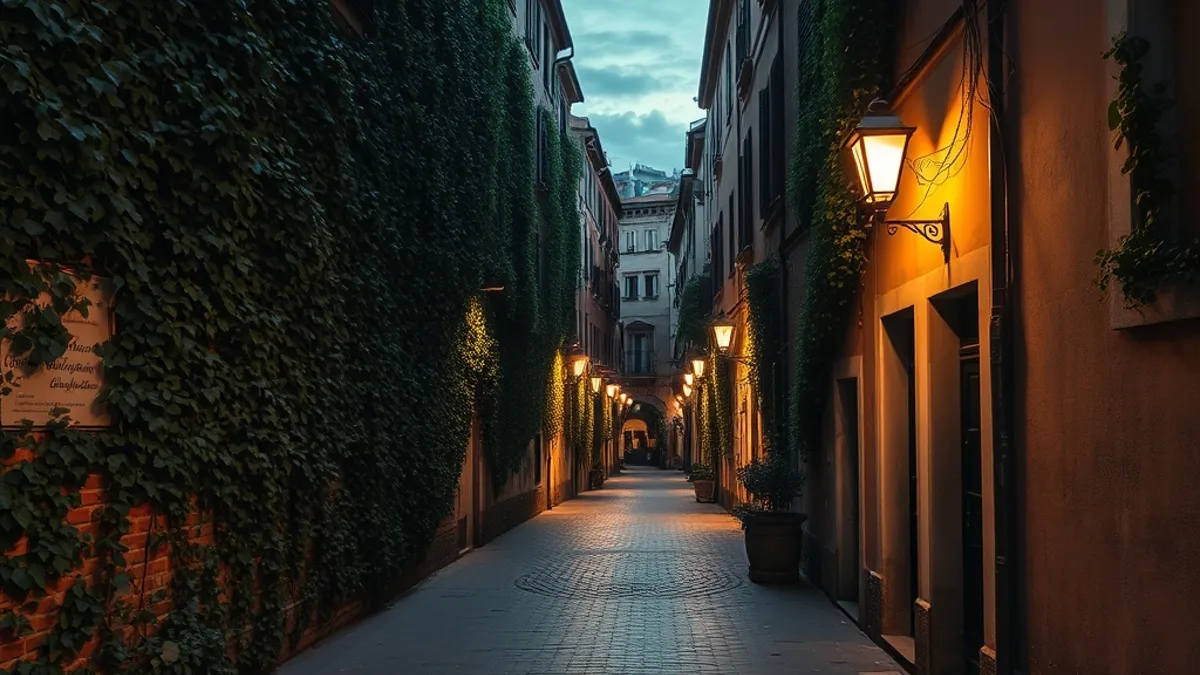
Trastevere sits across the Tiber from the historic center, a tangle of cobbled lanes where ivy hangs over doorways and trattorias spill tables onto the pavement. It comes alive in the evening, when locals and visitors fill the bars and restaurants, so expect a buzzy, social vibe rather than quiet residential calm. The upside is that you eat remarkably well within a few minutes of your door.
Monti, by contrast, sits just above the Colosseum on the other side of town. It has a bohemian, village-like feel with vintage shops, small cafes and a mix of students and long-term residents. Its position near the ancient core makes it the more practical choice if the Colosseum, Forum and Palatine Hill top your list.
- Getting to the sights: From either neighborhood, plan on a 15-25 minute walk to the main ancient sites, or a short tram or metro ride when your feet need a break.
- Evening vs. morning character: Trastevere is liveliest at night and can stay loud on weekends; Monti stays calmer after dark, which suits lighter sleepers better.
- Room style differs: Both areas lean toward guesthouses, B&Bs and small independent hotels rather than large chains, so check reviews for air conditioning and breakfast arrangements.
- Hills and cobblestones: Trastevere’s lanes can be uneven and slightly hilly, worth considering if you are traveling with a stroller or limited mobility.
Vatican and Prati: Quiet Comfort Near the Basilica
Prati sits just across the Tiber from the Vatican, and it feels like a different city from the crowded lanes of Centro Storico. This is an elegant residential district with wide, straight avenues, tidy apartment buildings and calmer evenings. You will still see tourists during the day, but the streets empty out in the evening and you will mostly be sharing restaurants with locals.
The location is hard to beat if the Vatican is your priority. St. Peter’s Basilica and the Vatican Museums are close enough to reach on foot, which matters when you want to be near the front of the line in the morning. If you are arriving by train or planning day trips, Metro Line A links the area to Termini station in about 10 minutes.
Who this area suits best
Prati is ideal for visitors focused on the Vatican Museums and St. Peter’s, and for families who want quieter nights without giving up a central location. Parents appreciate the wider sidewalks, the parks and the fact that children can sleep through the night without piazza noise drifting through the window.
Rates run slightly lower than Centro Storico, typically €130-260 for a double. You trade doorstep sightseeing for space, quiet and better value, which many travelers find is a fair deal.
Termini and Esquilino: Value and Transport Links
Termini and Esquilino are Rome’s most practical base. This is where you find the cheapest central rates, often €90-180 per night, along with the city’s main rail hub right on your doorstep. If your trip is short, starts with an early train departure or runs on a tight budget, the math here is hard to argue with. You also tend to get more space for your money, with many rooms offering larger layouts than the cramped conversions common in the historic center.
Be honest with yourself about what you are trading away. The area is more functional than charming, with busy streets, plenty of fast food and fewer postcard views. Before booking, check recent reviews on street safety and noise, since quality varies a lot block by block in Esquilino. Some streets near the station feel lively and convenient, while others a few blocks away feel noticeably grittier after dark. A little research here pays off.
Getting to the ancient center is straightforward. The Colosseum is about a 25-minute walk or two metro stops away, and Termini connects you to both metro lines, so most sights stay within easy reach.
- Day trips become easy: Termini is the departure point for regional trains to destinations like Florence, Naples and Orvieto, so you can be on a morning train within minutes of leaving your hotel.
- Airport transfers are simplest here: the express train from Fiumicino and airport buses from both airports terminate at Termini, meaning no metro changes with your luggage.
- Food options lean international: Esquilino is one of Rome’s most multicultural districts, so you will find excellent Chinese, Indian and Middle Eastern restaurants alongside traditional Roman trattorias.
- Supermarket and laundry access: unlike the postcard districts, this area has plenty of practical services that make a longer budget stay much easier.
When to Book and How to Save
Rome rewards early planners. For high-season stays in central neighborhoods, book 3-6 months ahead. The peak stretches from April to June and again from September to October, when the weather is at its best and demand pushes rates to their ceiling. The best-located rooms and apartments in Centro Storico tend to disappear first, so waiting until a few weeks out usually means paying more for less.
Travel in low season for the biggest savings
If your dates are flexible, visit between November and February. Hotel rates drop roughly 30-40% below high season, and you will share the major sights with far fewer tour groups. Pack a rain jacket and expect shorter daylight hours, but the trade-off is real money saved and easier restaurant reservations.
Shoulder months offer a middle path. March and late October balance decent weather with lower prices, and the city feels lively without being overwhelmed. These windows are a smart pick if you want good walking conditions but cannot commit to booking half a year in advance.
Whatever you choose, set a price alert for your dates and check cancellation policies carefully. Flexible rates cost a little more, but they let you rebook if prices drop before your trip.
Picking Your Rome Base
Picking the wrong base in Rome is an easy mistake, and a costly one: it can mean long walks, street noise at midnight or paying a premium for a location you barely use. The fix is simple. Match the area to your priorities before you fall in love with a hotel photo. Centro Storico is the pick for walkability, Trastevere or Monti deliver character and value if you don’t mind a short journey to the ancient sites, Prati suits travelers who want quiet evenings near the Vatican, and Termini works best for tight budgets and early trains.
Prices follow those trade-offs, and the differences between districts are significant in high season, so compare a few areas side by side before committing. To secure the best central options, book 3-6 months ahead, or plan your trip for low season, when rates drop noticeably across the city. If this helped you plan your stay, leave a comment or share the article with a fellow traveler.