Many resorts slap the word “family-friendly” on their website, but the reality on arrival often leaves parents managing bored kids in an unsuitable room. The brochure promised a kids’ club; the front desk says it opens only on weekends. The “family room” turns out to be a standard double with a rollaway bed squeezed against the bathroom door. These surprises are avoidable if you know what to check before you pay.
This guide walks you through the questions that separate a genuine family-friendly resort from one that simply tolerates children. We’ll cover what the label should actually mean, how to vet the kids’ club, which room configurations work for a family of four, and what pool and beach safety features to verify. You’ll also learn how to spot early dinner seatings, time your booking for peak seasons, and read guest reviews the way a parent would, so you can book with confidence.
What ‘Family-Friendly’ Actually Means at a Family-Friendly Resort
A true family-friendly resort designs its entire operation around children, not just tolerates them. That difference shows up in everything from the pool layout to the dinner schedule. A resort that merely allows kids will have the same adult-oriented routine it always had, with families expected to adapt. A genuinely family-focused property builds its facilities, staffing and daily rhythm around the needs of young guests and their parents.
The challenge is that marketing language tells you very little. Phrases like “kids welcome” or “ideal for families” can mean anything from a full supervised kids’ club with a dedicated building and trained staff to simply accepting children as paying guests. Two resorts can use identical wording and offer completely different experiences, which is why you need to look past the label and at the specifics.
What to look for on the official website
Start with the resort’s own site and check which dedicated facilities are actually listed. A strong family-friendly resort will feature a kids’ pool, a playground, a kids’ club with stated age ranges and hours, and family dining options such as children’s menus or early seatings. If these appear in the facilities list with real details, that’s a good sign. If the website only mentions “children stay free” with no supporting facilities, treat it as a warning that the resort may not have much to keep your kids occupied.
Check the Kids’ Club Details Before You Commit
The kids’ club is often the make-or-break feature of a family trip, so its details deserve a phone call or email before you commit. Start with the age range. Most kids’ clubs typically accept children aged 4-12, though some resorts take ages 3-15. If you’re traveling with a baby or toddler, ask directly: many clubs exclude under-fours entirely, and the alternative is paid babysitting arranged through the resort, which is a different service with different costs and booking requirements.
Next, ask about daily operating hours. A strong club runs at least 6-8 hours daily, roughly 9am-5pm, giving you a full day of coverage rather than just a morning session that ends when you still have hours to fill. A club that operates only two or three hours a day won’t give parents much of a break, no matter how good the program sounds.
- Registration requirements: Ask whether you need to sign children up a day in advance or by the morning, since popular clubs fill up during school holidays and drop-in spots may not exist.
- Staffing ratios: Ask how many supervisors work per group of children, and whether staff are trained in first aid, especially if your child is on the younger end of the accepted range.
- Lunch coverage: Some clubs include a supervised lunch in the program, while others require you to collect your child at midday, which changes how you plan your day.
- Outdoor time: Check whether activities include outdoor play or excursions, and whether sunscreen and shade are provided, since a club that keeps kids indoors all day may not suit every family.
Finally, confirm whether activities are included in your rate or charged separately per session. Some resorts bundle the club into the package, while others bill by the session or by the hour, and that difference can add up quickly over a week-long stay.
Room Configurations That Make or Break a Family Stay
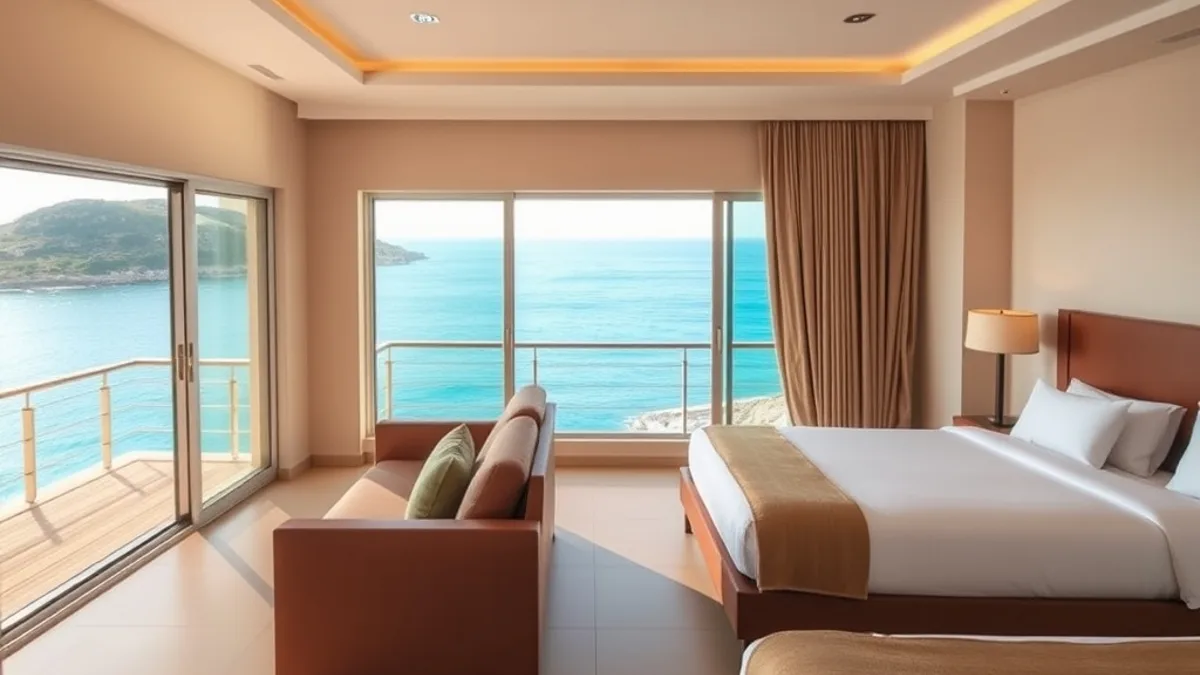
Standard double rooms rarely fit a family of four. Two adults and two children mean you need either a proper family room with real beds for everyone or connecting rooms, and neither is a given even at resorts that market themselves to families. Check the room categories on the resort’s website before booking, and look at the actual bed configuration listed for each category. A “family room” that sleeps two adults and one child won’t help a family of four, so read the fine print on sleeping capacity. If the website only shows photos and no bed details, email the resort and ask them to confirm the setup in writing.
Budget for the difference, too. Family rooms or connecting rooms usually cost 20-40% more than standard rooms, and that premium is often the reason families end up squeezed into unsuitable accommodations when they book late. If you’re weighing whether the upgrade is worth it, it can help to see how different resorts structure their family offerings, as in our guide to resorts for family-friendly luxury vacations.
- Crib policies: Cribs should be free at most family-oriented resorts, but confirm this in writing when you book, and ask whether the crib is a full-size crib or a travel bassinet if that matters for your child.
- Rollaway bed fees: Some resorts charge $10-25 per night for a rollaway bed, which adds up over a week, so ask before assuming an extra bed is included in the room rate.
- Maximum occupancy: Verify the maximum occupancy per room before booking, not after. Exceeding it can mean a denied check-in or a forced upgrade at the worst possible moment.
- Bathroom setup: Ask whether the family room has one bathroom or two, since a single bathroom for four people is one of the most common complaints in family reviews.
Getting these details confirmed before payment is far easier than negotiating at the front desk with tired kids in tow. A short email listing your room type, bed configuration, crib needs and occupancy takes five minutes to send and can save you an uncomfortable week of sleeping arrangements.
Pools, Beaches and Safety Features to Verify
Water is where most family accidents happen, so the pool setup deserves more scrutiny than any other resort feature. A truly family-focused property will have a dedicated children’s pool that is no deeper than 0.5-0.6 meters, clearly separated from the main pool where adults and stronger swimmers swim. If the resort only shows one large pool in its photos, that is a warning sign worth investigating.
Look closely at the safety measures around the water. Ask the resort directly, or check guest photos, for the following:
- Pool fencing: a barrier around the children’s pool keeps toddlers from wandering in unattended, which matters enormously if you have a child under four.
- Lifeguards: confirm whether trained lifeguards are on duty during opening hours, and at which pools, since some resorts only staff the main pool.
- Shallow beach entry: if the resort has a beach, look for a gentle, gradual slope into calm water rather than a sudden drop-off or strong waves, which changes how much supervision young swimmers need.
Finally, think about the practical gear. Pool towels should be provided free of charge, but floaties and beach toys are not always included. Some resorts supply them at no cost, others rent them daily, and a few offer none at all. If your child depends on swim aids, either confirm availability in advance or pack your own, since buying them on-site at a resort shop can be expensive and the selection is often limited.
Dining, Logistics and Timing Your Booking
Nothing exposes a resort faster than dinner at 7:30pm with a hungry, overtired toddler. Before booking, check whether the restaurants offer early dinner seatings, typically around 5:30-6:30pm, and whether high chairs are available at the tables. Children’s menus are another good indicator: a resort that genuinely expects families will offer smaller portions and familiar dishes rather than expecting kids to manage adult plates.
Location Matters More Than You Think
Even the best resort cannot stock everything a family needs. Confirm how close the property is to shops for essentials like diapers, formula and sunscreen, and to medical care in case of illness or injury. As a practical rule, having these family needs within 15-30 minutes of the resort makes a real difference. A remote paradise is wonderful until you need a pharmacy at night, so check the resort’s own description and recent guest reviews for how isolated it truly is.
Timing Your Booking
Family rooms and connecting rooms are the first category to sell out during school holidays. For trips during June-August and mid-December to early January, aim to book 4-6 months ahead. Booking early does more than secure the room type you actually need; it also gives you time to confirm cribs, kids’ club spots and dinner seatings before they fill. Last-minute bookings during peak season often leave families with whatever rooms remain, which usually means paying for two standard rooms or squeezing into a configuration that does not work.
How to Read Reviews Like a Parent
Marketing photos show a resort at its best, on its clearest day, possibly years ago. Guest reviews show what it was like last month. Before booking, filter reviews by ‘family’ on booking platforms so you hear from travelers with the same priorities as yours, not honeymooners who complained about noise from the pool. Then pay special attention to the 3-star reviews, which tend to be the most balanced: five-star reviews often gush without detail, while one-star reviews can reflect a single bad day.
Search for the Details That Matter
Use the review search function with specific keywords like ‘kids’ club’, ‘connecting room’ and ‘shallow pool’. These terms cut straight to the features that decide whether a family stay works. If parents repeatedly mention that the kids’ club was understaffed, or that connecting rooms were unavailable despite being requested, you have learned more than any brochure will tell you.
Trust Recent Guest Photos
Look at photos posted by recent guests rather than the official gallery. Guest pictures reveal the true condition of the playground, the actual depth of the children’s pool and how worn the family rooms are. This habit applies to any property type, by the way; even when browsing something like Paris suites with skyline infinity pools, real guest photos tell you far more than polished renders. A resort confident in its family facilities will have plenty of recent, genuine parent photos to back up its claims.
Booking With Confidence
A genuinely family-friendly resort proves it in the details, not the brochure. Look at the kids’ club schedule first: if it wraps up before lunch, you will spend every afternoon entertaining your own children. Then check the rooms honestly. A standard double built for two adults rarely works for a family of four, so confirm that a proper family room or connecting option actually exists at your travel dates, and expect to pay a bit more for the extra space.
Safety and comfort come next. Little ones need somewhere to splash besides the deep end, so scan the pool setup for a shallow children’s area. High chairs in the restaurant and a crib in the room should be standard, not add-ons you negotiate on arrival.
Finally, let recent guest reviews confirm or contradict the marketing. Parents who stayed last month will tell you whether the club was open as advertised and whether the room matched the photos. Run through these checks before you pay, and you avoid the classic mistake of arriving with tired kids to a room and a schedule that were never built for families. If this checklist helped, share it with another family planning their trip.