Picture this: you’ve booked a room for you, your partner, and your child, only to find out at check-in that the room sleeps two. It’s a common trap, because most standard hotel rooms are designed and priced for two guests, and front desks can’t always conjure up extra bedding on the spot. That’s where a hotel rollaway bed comes in—a simple folding bed that can turn a two-person room into a workable three-person room for a fraction of the cost of a second room.
In this guide, you’ll learn exactly what a rollaway bed is and how it differs from a sofa bed, when it makes sense to request one, and the step-by-step process for getting one confirmed before you arrive. We’ll also cover the fees you should expect, the room types and occupancy rules that affect availability, and what to do if the hotel simply doesn’t have one to spare.
What Is a Hotel Rollaway Bed?
A hotel rollaway bed is a folding bed mounted on casters, designed to be stored flat in a housekeeping closet and rolled into your room when you ask for it. Most are standard twin size, roughly 38 x 75 inches (97 x 190 cm), which is long enough for most adults but narrow enough to fit alongside existing furniture without turning the room into an obstacle course.
What sets it apart from other folding options
The main distinction is that a rollaway bed isn’t built into the room. A sofa bed folds out of the couch, and a murphy bed folds down from the wall—both are part of the furniture you see when you walk in. A rollaway bed, on the other hand, is brought in by housekeeping on request, which means availability depends on what the hotel has in storage that night, not on which room type you booked. That also means two guests in the same room category can have very different experiences: one gets a proper third bed, while another is told the hotel’s supply is gone.
What the mattress is like
Expect a thinner mattress than you’d find on a regular bed, typically 4-6 inches thick, often with a simple innerspring or foam core. Comfort is basic: fine for kids, acceptable for one-night stays, and less appealing for a week of sleeping. If you’re a sensitive sleeper booking a longer trip, it may be worth weighing other room options instead. Bringing a thin foam topper from home can also soften the experience without much luggage space.
When a Rollaway Bed Makes Sense
A rollaway bed shines in very specific situations, and knowing whether yours is one of them can save you real money. The basic math is simple: if a second room or a family suite costs significantly more than your current booking plus a small nightly fee, the folding bed wins. For many travelers, the trade-off between a thinner mattress and a lower bill is an easy one—especially when the stay is short.
That said, the bed only makes sense if everyone in the room can actually sleep comfortably. Two adults plus one child is the classic scenario. Two adults plus two children usually isn’t, since most rooms and fire codes won’t allow it. Here are the situations where a rollaway bed tends to be the smartest choice:
- Families with one child: Instead of paying for a second room or upgrading to a family suite, parents keep everyone in one room and one bed is swapped for a folding twin. Young kids usually don’t mind the thinner mattress at all.
- Groups of three friends: In a twin-double room, two people take the beds and the third gets the rollaway, so nobody has to share a bed with a travel companion who snores.
- Short stays of 1-3 nights: A thin mattress matters less when you’re only sleeping on it a night or two, especially compared to the $150-$300 you might save by skipping an extra room.
If your trip is longer, or if two of the three sleepers are full-sized adults who value their rest, the savings may not be worth the comfort trade-off. Use the length of your stay and who’s sleeping where as your guide.
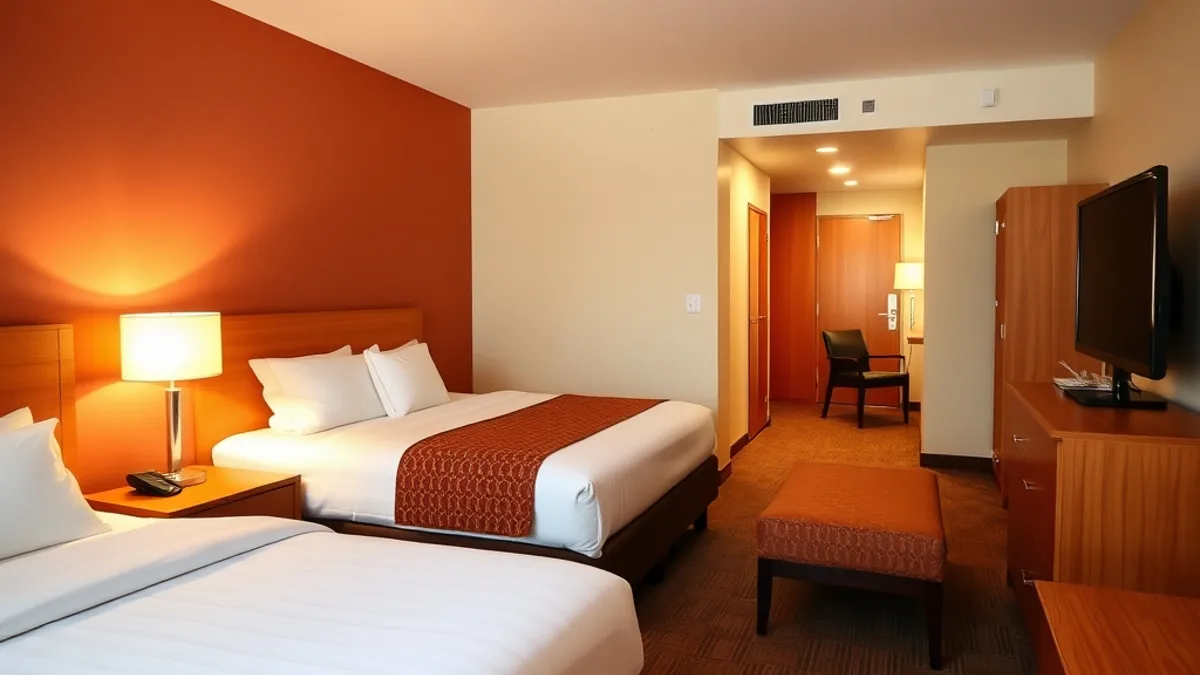
How to Request a Hotel Rollaway Bed
Getting a rollaway bed is mostly about timing and paper trails. Hotels keep a limited supply of these folding beds, and they hand them out to whoever asked first—so a request made at the front desk on arrival night is far less reliable than one confirmed days earlier. This matters even more if your room type is on the smaller side, since rollaway beds are usually only permitted in rooms with 300+ square feet of floor space. Follow the steps below in order, and your odds of having a bed waiting in your room go up dramatically.
- Add the request when booking online. Most booking engines and hotel websites have a special-requests field at checkout. Write exactly what you need, for example: “One rollaway bed for a third guest, please confirm availability.” This puts your request in the reservation record from day one, before the hotel’s supply runs low.
- Call the hotel 48-72 hours before arrival. Online requests are often read by humans only at check-in, so a phone call is what actually triggers action. Ask the front desk directly whether a rollaway can be guaranteed for your room type and dates.
- Get the confirmation in writing. Ask for an email or a message through the hotel’s app confirming the bed. A written record gives you something concrete to reference if there’s any confusion at the desk, and it’s also the moment to ask about any extra charges so there are no surprises later.
- Remind the front desk at check-in. Mention the rollaway immediately, before you head to your room. Housekeeping usually delivers within 30-60 minutes, so asking right away means the bed arrives while you’re still unpacking.
- Follow up in the evening if it hasn’t arrived. If no bed has shown up by dinnertime, call the front desk again rather than waiting until bedtime. Evening is when housekeeping runs out of hours, and a late request may not be fillable that night.
One last tip: be pleasant but persistent. Front desk staff juggle dozens of requests every day, and the traveler who confirms twice and follows up once is almost always the one who gets the bed. A few minutes of effort before and during your stay is all it takes to turn a cramped sleeping arrangement into a comfortable one.
Costs and Fees to Expect
Most midscale and upscale hotels charge a nightly rollaway fee, and the amount varies widely by property type. At all-inclusive resorts, the bed is often included at no extra cost, since your rate already covers the room’s occupancy. Budget chains are less predictable: some don’t offer rollaways at all, while others provide them free, so it pays to ask before you book.
Here’s the detail that catches many travelers off guard: the rollaway fee is rarely the only charge. Many hotels also apply a third-person occupancy fee, typically $20-$40 per night, on top of the bed itself. The reasoning is that an extra guest consumes breakfast, towels, and amenities, and the hotel prices that in separately. Ask specifically whether both charges apply, because some properties bundle them while others list them separately on your folio.
How the nightly fee adds up
Rollaway fees are almost always charged per night, not per stay. That matters more than it sounds. A modest nightly fee feels trivial on a one-night stopover, but over a longer trip it compounds quickly. A five-night stay can easily add a noticeable chunk to your bill once you combine the rollaway fee with the extra-person charge, which is real money compared to simply booking a larger room or a suite from the start.
Always ask the hotel to quote the total cost for your entire stay, including any extra-person fee, and request it in writing. That way there are no surprises on the final bill at checkout. If the combined charges start to approach the cost of a bigger room, it may make more sense to upgrade instead.
Room Types and Hotel Policies That Affect Availability
Before you count on a rollaway bed, make sure your room can legally and physically hold one. Fire codes often cap occupancy at 2 adults plus 1 rollaway, which means a family of 4 usually needs two beds plus a rollaway, or a suite with existing bedding for everyone. The front desk can’t bend this rule, so no amount of friendly negotiation will get a fourth sleeping spot into a standard room.
Space is the other constraint. Rollaway beds generally require rooms of 300+ square feet, because the open bed needs floor space and a walkable path around it. Standard doubles at city hotels are often too small, especially in older buildings where every inch is spoken for.
The type of property matters too. Resorts and suites-heavy hotels stock more rollaways because their larger rooms can accommodate them. Boutique and historic hotels, with fixed layouts and compact rooms, frequently have none at all.
- Occupancy limits include children. At many properties, a child counts as a guest under fire codes, so 2 adults plus 2 kids may exceed the limit even if one child is small.
- Limited stock sells out. Hotels keep only a handful of rollaways per property, so during busy periods they can all be reserved even when rooms are still available.
- Substitutes are common. Some hotels offer a crib or a daybed instead of a rollaway; a daybed is a fixed piece of furniture, so it can’t be added to a room that lacks one.
- Historic buildings have fixed layouts. In protected older properties, furniture placement and room structure are sometimes dictated by preservation rules, leaving no floor space for a folding bed.
If rollaways are sold out, ask the hotel exactly what alternative it offers and whether that option is guaranteed for your dates. A vague “we’ll see what we can do” is rarely good enough when a child’s sleeping spot is on the line.
Alternatives If a Rollaway Bed Isn’t Available
If the hotel can’t provide a rollaway bed, don’t panic — there are usually better options anyway. The most reliable choice is to book a room that already sleeps your whole group, so nothing has to be delivered, stored, or squeezed through the door on the day you arrive. It also removes the small worry of whether housekeeping still has a folding bed in stock when you show up.
A room with a sofa bed solves the problem permanently: the third bed is built in, made up when you ask, and never depends on housekeeping having stock. The mattress tends to be wider and comfier than a folding twin as well. Family rooms go one step further, often including a separate sleeping area or bunk-style beds designed for children.
Options worth asking about
- Connecting rooms. Two adjoining rooms with a door between them give a family of 4 or more real space and privacy, and some hotels offer a discount on the second room when booked together.
- A suite with a pull-out. Suites often sleep 4-5 with a sofa bed in the living area, and the pull-out mattress is usually thicker and more comfortable than a rollaway.
- A crib for infants. If your youngest is a baby or toddler, skip the rollaway entirely and request a crib instead — most hotels provide them free of charge, though you should still reserve one in advance.
- A daybed room. Some properties have specific room categories with a daybed already in place; booking that category locks in the sleeping arrangement at the time of reservation rather than at check-in.
Whichever option you choose, book it as part of your reservation rather than as a last-minute request. A room type that includes the bedding you need is confirmed the moment you book, which is far more reassuring than hoping a folding bed is available on arrival. If you do end up needing a backup plan anyway, ask the front desk early in your stay rather than at bedtime — properties can often shuffle furniture between rooms when they know ahead of time.
Key Takeaways for a Smooth Stay
Booking a room for three people often comes with an unwelcome surprise at check-in: many standard rooms are set up to sleep only two. A hotel rollaway bed solves that problem. It is a folding twin bed, roughly 38 x 75 inches, that housekeeping rolls into your room and removes after your stay, turning a two-person room into a three-person room without the cost of a second room or a suite.
The trick is to plan ahead. Confirm your request 48-72 hours before check-in, since many hotels cap rooms at 2 adults plus 1 rollaway and only allow the bed in rooms with 300+ square feet of floor space. Budget for the fee, which typically runs $10-$50 per night at midscale hotels, and ask whether a third-person occupancy fee applies on top of it. Check the room size and occupancy rules before you book, and the bed should actually arrive. If this helped you plan a trip, leave a comment or share the article with a fellow traveler.