You love the idea of sleeping under the stars — but you can’t face a thin tent, a cold patch of ground and a walk to a shared bathroom in the dark. That’s exactly the problem glamping solves. Short for “glamorous camping,” it pairs dramatic outdoor settings with real beds, heating, electricity and often private bathrooms, so you get the scenery without the sacrifice.
This beginner’s guide walks you through everything you need to plan a first trip with confidence. We’ll explain what glamping actually is, break down the most popular stay types, and help you pick a setting that suits your comfort level. You’ll also find practical advice on when to book, what stays typically cost and what’s included, and how to choose your first glamping trip without any nasty surprises. By the end, you’ll know exactly how to trade your sleeping bag for a king-size bed in the wild.
What Is Glamping, Exactly?
Glamping — a mashup of “glamorous” and “camping” — pairs outdoor settings with hotel-grade comfort. Instead of a sleeping bag on the ground, you get a real bed, heating, electricity and, in many cases, an en-suite bathroom. The canvas or timber structure sits in a scenic location, but everything inside is set up like a boutique hotel room before you arrive.
The biggest difference from traditional camping is what you pack. With glamping, you arrive with just a suitcase. The structure, the linens, the lighting and usually the meals are all provided, so there’s no wrestling with tent poles or hauling a cooler. You simply check in, pour a glass of wine and watch the sun go down.
From safari tents to full-service eco-lodges
The experience covers a wide spectrum. At the simpler end, rustic-chic safari tents offer a canvas bedroom on a wooden deck with a proper bed and a basic bathroom. At the luxury end, fully serviced eco-lodges add spas, fine dining and staff on call around the clock. Most first-timers land somewhere in between, and that middle ground — comfortable, quiet and genuinely outdoors — is where glamping shines.
Popular Types of Glamping Stays
Glamping stays come in a handful of distinct formats, and each one changes the feel of your trip. The choice matters more than you might expect: a canvas structure behaves very differently from an insulated dome once the wind picks up, and prices vary widely between formats. Before booking, think about how close to nature you genuinely want to be — and how much weather you’re willing to hear through the walls.
As a rough guide, canvas formats tend to sit at the lower end of the overall price range, while architectural builds and panoramic domes command more. Here’s a closer look at the most common options.
- Safari tents — Canvas structures raised on wooden decks, the classic glamping format. Many include verandas with outdoor seating, proper beds and often an en-suite bathroom, making them a comfortable middle ground for first-timers.
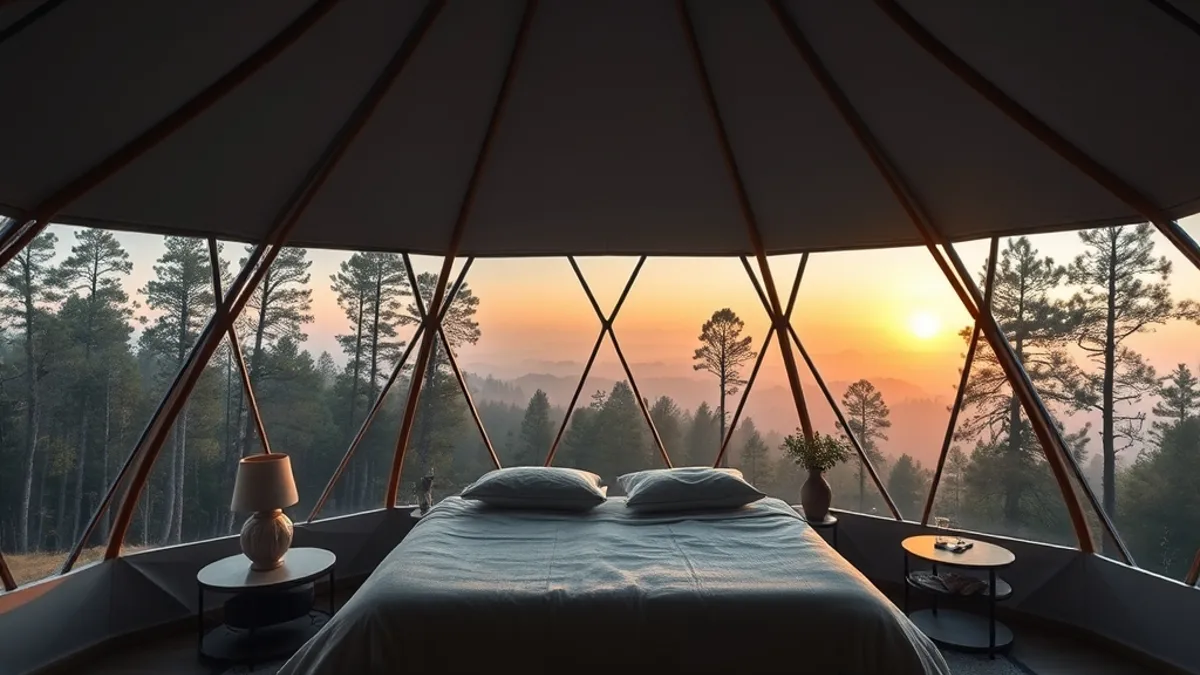
- Geodesic domes — Curved shells with panoramic windows, ideal for stargazing from bed. Their insulated construction also makes them a solid pick for cooler months at the start or end of the season.
- Treehouses and A-frame cabins — Elevated or architectural stays that suit couples and design lovers; a treehouse-style villa overlooking the jungle shows just how far this format can go.
- Yurts and bell tents — Round canvas shelters that are usually the most affordable entry point, making them a good low-risk first test of glamping.
If you’re unsure where to start, safari tents and domes are the safest bets: widely available, well reviewed and easy to compare across destinations. Save the more unusual formats for trip number two, once you know how you sleep outdoors.
Where to Go: Settings That Suit First-Timers
The setting shapes your glamping trip as much as the tent itself. Some locations wrap the stay in guided experiences and attentive staff, while others leave you alone with the landscape. For a first trip, pick an environment that matches how adventurous you actually feel — not how adventurous you’d like to be after a full night’s sleep and a strong coffee.
Three settings that work well
Rainforest and jungle sites are a natural fit for beginners. They offer guided nature experiences, warm temperatures year-round and a setting you simply can’t get at home. Some properties take the format to true resort level — a tented jungle retreat in Ubud, Bali is a good example, with individual tented suites and full service rather than a bare-bones camp. Island and overwater-style retreats deliver the highest comfort levels of all, but they command premium rates, so treat them as a special-occasion option rather than a first test.
Mountain and forest locations suit beginners who want structure to their days — hiking by day, a wood stove and a hot drink by night. The air is crisp, the trails start at your doorstep and the evenings feel properly outdoorsy without ever being uncomfortable.
One practical rule of thumb: choose a site within roughly 2–3 hours of a major airport. It keeps transfers short, limits the chances of a travel-day hiccup eating into your stay, and makes a two- or three-night trip far easier to organize. If the site you love sits deeper in the wilderness, check whether transfers are included before you commit — remote locations often mean a long final leg by boat, 4×4 or small plane.
When to Book and When to Go
Glamping sites are small, often with just a handful of tents or domes, so the best dates sell out long before a typical hotel would. A property with eight units and a strong reputation can be fully committed for an entire summer before the season even starts. Timing your booking matters just as much as picking the right property, especially if you have your heart set on warm-weather dates or a specific tent with the best view on site.
- Reserve 3–6 months ahead for summer dates. For peak season travel in June through August, book as early as you can. Popular sites with limited units can be fully committed well before the season starts.
- Allow 6–12 months for holiday weeks. Dates around major holidays are the busiest of the year. If you want a specific tent over a specific week, treat it like booking a special-occasion restaurant and plan far in advance.
- Check the operating season before you fall in love with a site. Most glamping properties in temperate climates run from roughly April through October and close entirely in winter, when canvas structures and plumbing become impractical.
- Consider the shoulder season. Trips in May–June or September often cut rates by 20–30%, and the site will feel noticeably quieter. Weather is usually still pleasant, and you get more attention from staff.
If your schedule is flexible, a shoulder-season stay is the smartest way to try glamping for the first time. You pay less, share the site with fewer guests and still enjoy the full experience, from campfire evenings to the same meals and activities offered in high season. Staff also tend to have more time to answer questions and help you plan excursions when the property is not running at full capacity.
One last tip: before you lock in your dates, confirm exactly what is open during your stay. Some on-site restaurants, spa services or guided activities may run on reduced schedules outside peak months, and remote locations may have limited alternatives nearby. A quick message to the property before booking can save you from surprises and help you decide whether the quieter weeks still deliver everything you want from the trip.
What Glamping Costs and What’s Included
Glamping prices vary more than most first-timers expect. A simple bell tent in a field might cost about the same as a budget hotel, while a fully serviced eco-lodge with a private deck and spa treatments can rival a five-star resort. The spread is wide, and two sites that look similar online can sit at very different points on that scale depending on the region, the season and the level of service.
What your nightly rate usually covers
At mid-range and luxury sites, the rate typically includes a proper king bed with quality linens, an en-suite bathroom and breakfast. Many upscale properties go further, adding chef-prepared dinners, guided activities like kayaking or wildlife walks, and extras such as fire pits stocked with wood. Unlike traditional camping, you should not need to bring anything beyond your clothes and toiletries.
Watch for extras at remote locations
The most common budgeting mistake is assuming everything is bundled. At remote eco-resorts, transfers from the nearest town, meals beyond breakfast and excursions are sometimes charged separately. These add-ons can easily add $100–$300 per day if paid individually, which can double the real cost of a stay that looked affordable online.
Before you book, ask the property for a full cost breakdown: what is included in the rate, what is optional and how you will get there. A five-minute email at the planning stage prevents unpleasant surprises on your final bill and helps you compare sites on a like-for-like basis.
How to Choose Your First Glamping Trip
Your first glamping trip should feel like a treat, not a test of endurance. The good news is that you control how rustic the experience gets. The key is matching the stay type and the property to your personal comfort threshold, then confirming the details that matter most to you before you pay the deposit.
Start by being honest with yourself about canvas. If you are unsure whether you will sleep well listening to wind flap the walls, choose a geodesic dome or a solid-wall cabin instead of a traditional safari tent. You still get the outdoor setting, but with the reassurance of a rigid structure. Then spend some time reading recent reviews, paying particular attention to comments about rain and wind. Thin tent walls can be noisy in a storm, and guests who stayed during bad weather will tell you exactly how the structure held up.
Before booking, work through this checklist:
- Heating or cooling. Ask how the unit is climate-controlled and whether heating runs all night or switches off — a wood stove that dies at 2 a.m. makes for a cold morning.
- Private bathroom. Confirm the bathroom is en-suite rather than a shared facility a short walk away, especially if you plan to visit in cooler months.
- Wi-Fi needs. If you need to work or stream, verify the connection quality directly with the property rather than trusting the listing.
- Minimum-stay requirements. Many small sites require two or three nights, particularly on weekends, so factor that into your dates and budget.
Finally, pack smart. Bring layers, since temperatures can swing between a warm afternoon and a chilly evening, and use soft-sided duffel bags rather than hard suitcases. Even luxury tents have limited storage, and a squishy bag tucks far more easily under a bed or into a wardrobe.
Ready to Sleep Under the Stars in Style
If you love the idea of falling asleep to crickets and rustling leaves but shudder at the thought of a thin tent, cold ground and a long walk to a bathroom, glamping is built for you. It keeps everything you want about the outdoors — the scenery, the quiet, the campfire evenings — and swaps out the hardships for real beds, heating and, at many upscale sites, en-suite bathrooms and chef-prepared meals.
The smartest way to start is small: book one or two nights in the shoulder season, when rates often drop 20–30% and the site is calmer, and see how the experience feels before committing to a longer trip. With the right stay type, season and booking window, your first glamping trip can feel less like camping and more like a boutique hotel in the wild. Have you tried glamping yet? Share your plans or questions in the comments below.