A romantic glamping escape sounds perfect in theory: waking up in a tented suite or treehouse with jungle views, no crowds, and nothing to do but enjoy each other’s company. In practice, many couples book the wrong season, pick a stay that lacks privacy, or get surprised by transfer logistics and meal costs that double the budget.
The good news is that a little planning prevents most of these mistakes. This guide walks you through choosing a destination that matches your style, picking the right stay type and budget, timing your booking for the best value, planning romantic experiences on site, and packing so you stay comfortable from arrival to departure. Follow these steps and your romantic glamping escape becomes the intimate, adventurous trip you actually imagined, without the costly surprises along the way.
Choose the Right Destination for Your Romantic Glamping Escape
The setting sets the tone for the whole trip, so start by matching it to your shared style as a couple. If you both love wildlife and lush scenery, a rainforest camp delivers misty mornings and the soundtrack of birds at dawn. If your idea of romance involves water, an island or coastal site puts snorkeling and sunset walks on the doorstep. Couples who prefer crisp air and dramatic views should look at alpine locations, where cool evenings make the fire pit the best seat in the house.
Check the season before you commit
Dry-season windows matter more for glamping than for hotel stays, since many tented sites are open-air by design. Bali’s dry season runs from April to October, while Thailand’s falls between November and April, and those windows typically bring the best weather for sleeping under canvas. Traveling outside these months can mean heavy rain, muddy paths, and closed or partially operating camps, so always confirm the property’s operating season before booking.
Finally, think honestly about travel time. Remote island camps often require a boat or seaplane transfer after your flight lands, which adds hours and cost to the journey. That extra effort can be part of the adventure, but if you only have a long weekend, a site closer to a major airport may serve your romantic glamping escape better than a far-flung paradise.
Pick the Right Stay Type and Budget
Once you know where you’re going, decide what kind of stay fits your budget and your idea of romance. Romantic glamping rates typically range from $250 to $1,500 per night for two, and the spread reflects real differences in design, location, and service. Tented suites offer classic safari-style charm, treehouse villas lift you into the canopy, and overwater-style cabins put you right above the water. If the treehouse idea appeals to you, reading an honest review like this treehouse-style villa overlooking the jungle shows what that experience actually feels like day to day.
Privacy should drive your choice as much as price. Look for standalone units spaced well apart, private decks, and plunge pools, since these features turn a beautiful site into a genuinely intimate one. Also confirm exactly what the rate includes before you book, because meal plans can add $100 to $300 per person per day, which changes the real cost significantly.
- Standalone units: Ask how far apart accommodations are and whether paths between them are screened by planting, so you’re not waving at neighbors from your deck.
- Plunge pools and outdoor baths: Confirm whether these are private to your unit or shared with other guests, since listings don’t always make the distinction clear.
- Meal plan structure: Find out if the plan covers all meals, drinks, and snacks, or only breakfast and dinner, so you can budget for extras like cocktails or packed lunches.
- Housekeeping and service: Check how often the tent or villa is serviced and whether staff reach you discreetly, which matters more in open canvas accommodations than in a hotel.
Time Your Booking and Dates
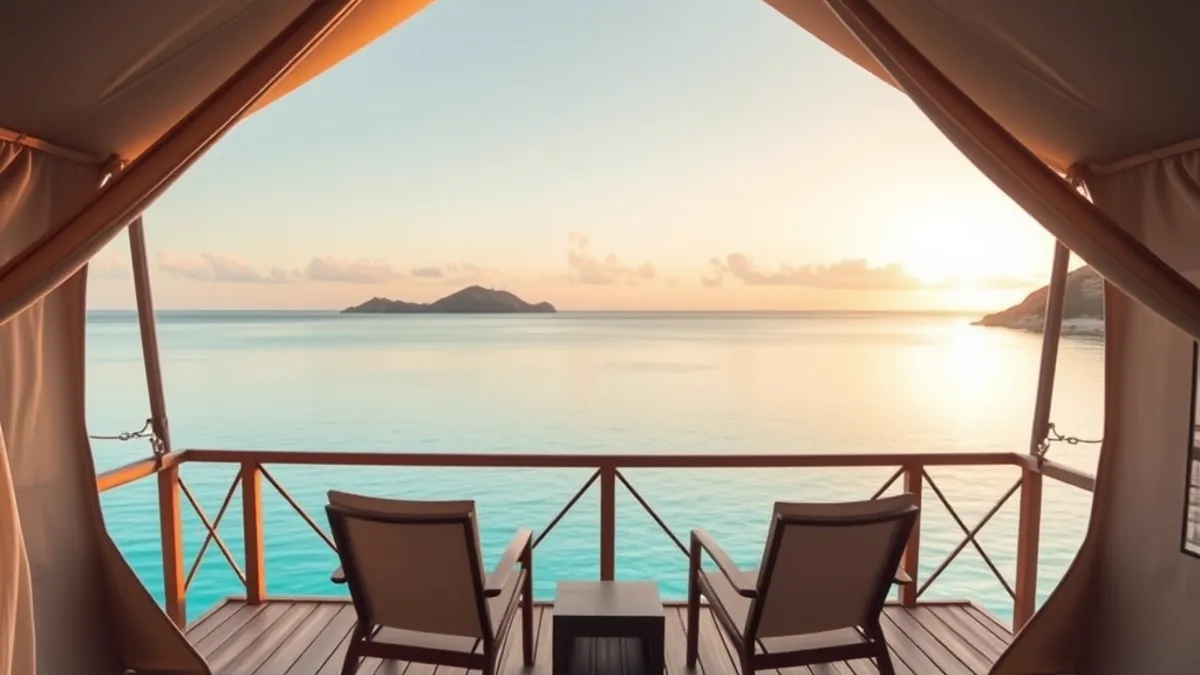
Timing is where many couples lose money on a glamping trip. Remote camps have limited inventory, often just a handful of units, so the best dates and rates go early. A tented suite with a private deck facing the sunset is not something you can book the week before in high season. Work through these steps in order, and you will avoid the two most common mistakes: paying peak prices for a leftover unit, or falling in love with a camp that has no availability for your dates.
- Count back from your travel window. For peak season travel, book 3 to 6 months ahead so you have real choice in units and dates rather than whatever is left.
- Allow longer for high-demand destinations. For spots like Bali or the Maldives, plan on 6 to 12 months of lead time, since the most private and scenic units sell out first.
- Consider shoulder season instead. Months like May-June and September-October often bring better rates and fewer guests in many destinations, which means quieter decks, easier spa scheduling and more attentive service.
- Plan for the minimum stay. Most remote luxury camps require 2 to 3 nights minimum, so build your dates around that from the start rather than discovering it at checkout.
Once your dates are locked, set calendar reminders for the next stage of planning, like reserving spa treatments and private dinners. Booking early also gives you time to arrange transfers and confirm details with the camp, which is especially useful when your arrival depends on a boat or seaplane schedule that needs coordinating in advance.
One extra tip: ask the camp directly about cancellation and deposit policies when you book. Flexible terms matter more at remote properties than at standard hotels, because weather and transfer delays can affect your arrival. A short email confirming these details early saves awkward conversations later.
Plan Romantic Experiences On Site
The most romantic experiences at a luxury camp are usually the first things to sell out. Couples spa treatments and private dinners — the candlelit table on your deck, the massage pavilion booked for just the two of you — often have only a handful of slots each evening. Message the property as soon as your dates are confirmed and reserve these before you even think about flights. If you’re dreaming of a rainforest spa retreat, inspiration like a rainforest luxury spa escape in Australia shows how memorable a well-timed couples treatment can be.
One shared adventure per day
It’s tempting to fill every hour with activities, but the best romantic trips leave room to simply be together. Choose one shared adventure per day — a guided rainforest walk in the morning, snorkeling after lunch or stargazing from your deck after dark — and let the rest of the day unfold slowly. This rhythm keeps the trip exciting without turning it into a schedule.
Finally, ask about in-tent extras when you make your reservation. Many camps can arrange champagne on arrival, flower setups or a sunrise breakfast delivered to your deck, but only if you request them ahead of time. These small touches cost far less than an upgrade and often become the moments you remember most.
Pack and Prepare for Comfort
Tropical doesn’t mean warm around the clock. Even in Bali or Thailand, nights in the hills or under canvas can turn surprisingly cool, so pack layers you can add after sunset. Bring insect repellent for evenings outside and reef-safe sunscreen if snorkeling is on your itinerary — it protects the coral you came to see.
Lighting is the detail most couples overlook. Tented sites are often dim after dark, with just a few low-watt lamps, which is lovely for atmosphere but tricky for reading or finding your charger. A small lantern solves both problems and adds a soft, romantic glow of its own.
- Quick-dry clothing: Humidity and occasional showers mean cotton stays damp for hours; synthetic or merino pieces dry overnight.
- A light rain shell: Even in dry season, a brief downpour can interrupt a deck dinner, and a packable jacket keeps plans intact.
- Soft-soled shoes: Many camps ask guests to remove shoes inside tents, and paths between units are often sand or boardwalk.
- A printed copy of your transfer details: Cell coverage at remote camps can be patchy, so keep boat or seaplane times on paper as backup.
Before you finalize your packing, confirm transfer logistics and luggage limits for boat or seaplane arrivals well in advance. Seaplanes in particular often enforce strict weight caps per passenger, and soft-sided bags are usually required. Check with your operator for current limits so your luggage doesn’t become the most stressful part of the trip.
Wrap Up Your Romantic Glamping Escape Plan
A romantic glamping escape that feels both adventurous and intimate comes down to four decisions: the right destination, the right stay type, smart timing and experiences booked on site. Get those aligned and you avoid the costly mistakes — wrong-season rain, sold-out spa slots, surprise meal-plan charges — that derail so many couples’ trips.
Book 3-6 months ahead for peak season, or travel in shoulder season for the best value and fewer guests around you. Sort your packing and transfer logistics early, and what remains is a seamless, intimate adventure for two under canvas. If this helped you plan your escape, leave a comment or share the article with someone you’d love to travel with.